
Straight Lines and Long Shadows
Thirty-six seasons of coaching leadership with Tim Neiman
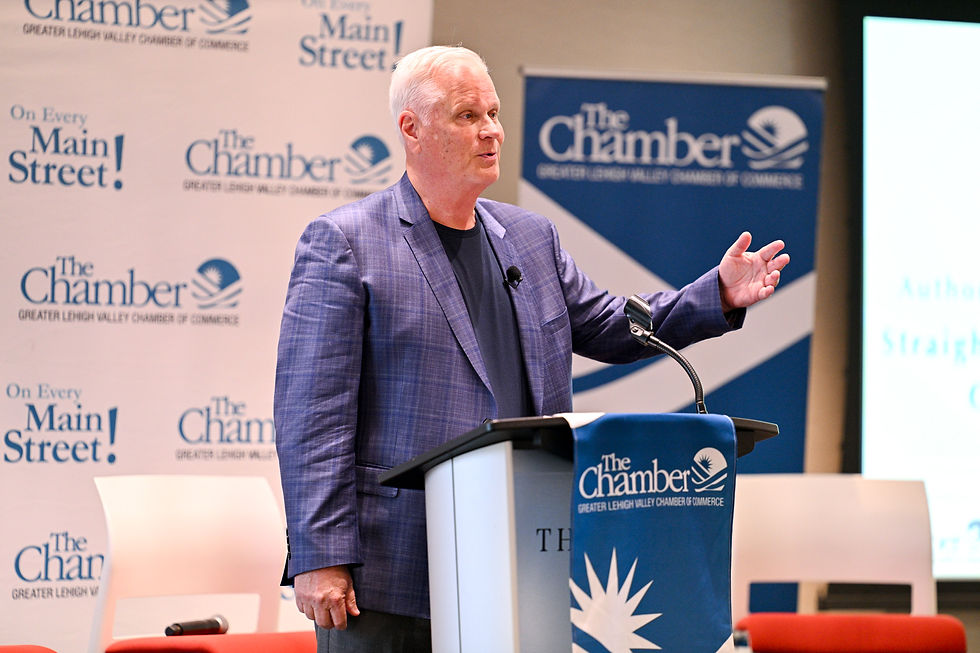
I am starting something new, and this is the first edition. I am calling it the “Leaders Need Leaders” series, because that is the premise. Every so often I am going to sit down with a leader I respect, record the conversation, and write up what I took from it. Some of them will come from athletics and some will come from entirely different industries, because the problems of leading people do not change much when you move them from a dugout to a boardroom. These will show up periodically rather than on a schedule. I would rather wait for the right conversation than fill a slot
on a calendar.
The name is not decoration. Every person I plan to talk to had someone in their corner, and every one of them will tell you they did not figure it out alone. The people we ask to carry the most are usually the people nobody is pouring into, and that is the gap these conversations are meant to close.
The first is Tim Neiman. Tim spent 36 seasons as the head baseball coach at DeSales University and retired after the 2025 season with 868 wins, ten conference championships, nine NCAA tournament appearances, and a trip to the Division III College World Series in 2003. The coaches in his own league voted him coach of the year more than a dozen times, which is a harder credential to earn than a win total. He now speaks to teams and organizations, hosts the Straight Lines podcast, and has written two books, Team Killers and What Is Your Legacy, with a third called Cast a Large Shadow coming in October. He hosted me on his podcast a few months ago, and he has been generous with me ever since.
His insights are worth your time.
People can see behind the blinds
I asked Tim how he evolved as a leader over nearly four decades, and the first thing out of his mouth was that there is no playbook for it. What there is, he said, is being authentic, genuine, dependable, and accountable, because people can see straight through you if you are not. He put it in terms of looking behind the blinds. If a player pulls the blinds back and finds something other than what you have been presenting, you are finished, and no amount of technical competence will save you.
That deserves more attention than it usually gets, because most of us spend our energy on the presentation rather than on what is behind it. Tim said something similar about credentials. You need enough pedigree to coach the game, but the pedigree is not the job.
It took ten years to understand what the job actually was
The most honest thing Tim said was that he did not really understand his own role until about a decade in. He came in young, expecting to put in a few good years at DeSales and move on to other things, and then it dawned on him that the reason he was there had very little to do with the next rung. He described the shift this way: sometimes good leaders simply get out of the way. They let people do their thing and they guide them.
The wins, in his telling, are a result of doing things right rather than the thing you chase. What he chased instead were the relationships, and they are still paying him back. He has former players in their thirties and fifties who call him when they need a reference, need advice, or want him at their engagement. I got a text this same week from a man in my tank platoon in the late nineties who just wanted to say thanks. Neither of us has found anything in our careers more satisfying than that, and neither of us understood it at the time it was being built.
Own the losses and give away the wins
Tim was direct about this. A leader owns the losses and the failures, and the victories belong to the people who earned them. His reasoning was practical rather than sentimental. If the people you are responsible for carry the weight of a loss, they will dwell on it and they will not perform.
I asked him how he squared that with holding those same people accountable, because the two pull against each other. His answer was the best piece of tactical advice in the whole conversation. When you are angry, give it a day. He said he learned early that anything he said in the moment was probably something he would regret, and that by the next morning he was calm and the point
landed better anyway. He also pointed out that the player already knows. Nobody who booted a ground ball needs to be reminded that he booted it. What he needs is the plan for fixing it, which is why they call it practice.
Emotional regulation is an underrated leader trait, and it is one that plenty of leaders in the military and in athletics have historically celebrated the absence of. Chewing someone out in front of the group serves exactly one person, and it is not the person being corrected.
Build people who will leave you
Tim has 23 former players and assistants coaching right now at levels from high school to Major League Baseball. He used to joke to his assistants that he wanted to learn what they knew, and then they could go. He gave them the parameters of the program and real room to work inside them, on the theory that if you are not going to let people do their thing, there is no reason to have hired them.
He described the alternative with a helpful image. Everybody is climbing a ladder. When someone is coming up behind you, are you stepping on their knuckles, or are you reaching a hand down? He was clear that reaching down means being genuinely fine with them passing you. That takes more humility than most leaders have, and it is the difference between building a career and building a legacy.
For all that latitude, he had one standing rule for players and coaches alike: do not embarrass the club.
Meet them where they are
Thirty-six seasons means the coach gets a year older every year and the players stay the same age. I saw the same thing across 26 years in uniform. Tim admitted that for his first decade or so it was his way or the highway, and that it worked at the time because that generation could absorb it. What changed was not the quality of the young people but the environment they arrived from, and he stopped getting hard on anyone until he understood where they were coming from.
This is where I push back on seasoned leaders who complain about kids today. They are different. That does not make them worse than we were, and we were different from the people who led us. Figuring out how to lead the people you actually have, rather than the people you wish you had, is the job you are being paid to do.
One more thing worth stealing from Tim here. His door was open to any player at any hour for anything, baseball or otherwise. His door was not open to parents on the subject of playing time. If a parent contacted him on a player’s behalf, he told the player about it and declined to have the conversation, unless it concerned the young man’s health, education, or well-being. That is not stubbornness. It is protecting the trust and direct relationship that everything else depends on.
Blame is the first domino
Team Killers came out of a simple observation. There is no shortage of books telling you the ten things to do, and very few telling you what to watch for. Of the seven toxic traits Tim writes about, I asked him which one he still sees most, and he did not hesitate. Transfer blame.
He walked through the sequence, and it is a sequence rather than a list. Blame creates drama. Drama creates panic. Panic creates fear about what is going to happen to me. Fear contaminates the group, and by that point you may not recover. He described it as a whisper down the alley that becomes a brush fire and then a forest fire. The dominoes only fall if the first one does.
The related failure he sees more than he used to is teammates who will talk about each other but will not confront each other. Everyone wants a team where the players hold one another accountable, because that team is far stronger than one where only the coaches do it. What gets missed is that team accountability cannot exist until individuals accept personal accountability first, and that requires the moral courage to say something to a peer’s face.
The first toxic trait in his book, by the way, is contentment, and he means it in a specific way. Celebrate the championship, then ask what is next, because everyone else is now trying to beat what you just did. He gave me a small version of it from the broadcast booth. A pitcher threw well against a team on Tuesday, came back against the same team on Sunday, decided to stick to his guns, and lasted four innings. The hitters adjusted. He did not.
Priority, not balance
I do not like the word balance, because it implies fifty-fifty and that is never true. Tim does not use it either. He uses priority, and he orders it plainly: faith, then family, then occupation, then everything else. His wife Roseanne would remind him that it is not the quantity of time but the quality of it, and that the seasonal nature of coaching means the off months have to provide that quality.
I told him the thing that finally unlocked this for me, which is that I spent years treating home and work as competitors. Once I started seeing them as complementary, everything opened up. The better husband and father I was, the better leader I was, and it ran in both directions.
He closed that thread with something he got from Kevin Daly, a former Harlem Globetrotters captain he had on his podcast. Tim asked him how a man performs at that level two hundred nights a year, sometimes twice in a day. Daly told him you bring it every day, because it might be the first time anybody has ever seen you. Tim applies it to his family as much as to a stage, and that is the version I find harder to argue with. It’s easy to just let the people at home get whatever is left of you, and they deserve better than the leftovers.
The shadow
Tim’s next book got its title from a walk in a park about ten years ago. He and his wife were walking their huskies when two older men stopped him, called him by name, and talked with him for five minutes. He did not recognize either of them. As they left, one of them told him he cast a large shadow. Tim had no idea what the man meant and asked Roseanne on the way home. She told him it meant he had affected more people than he would ever know.
That’s the whole thing, really. You do not get to see most of your own impact. You find out about a sliver thirty years later in a text message or a phone call from someone who needs a reference at fifty years old. Which means the only sane way to lead is to assume the shadow is longer than you think and to behave accordingly, on the days when nobody is watching and on the days when it is the first time someone has ever seen you.
My thanks to Coach Neiman for going first.
Where to find Tim
His website is www.coachtimneiman.com, where you can find his books, his speaking information, and the podcast in one place. Team Killers and What Is Your Legacy are both available there and on Amazon. Cast a Large Shadow is targeted for release on October 12.
The Straight Lines podcast is on Apple, Spotify, iHeart, and anywhere else you stream, and the video episodes live on his YouTube channel, the Neiman Legacy Network. He is active on LinkedIn, Instagram, and Facebook, and he genuinely wants the connection, so reach out to him. Tell him I sent you.


Comments